Teeth Braces: Types, How They Work & Costs
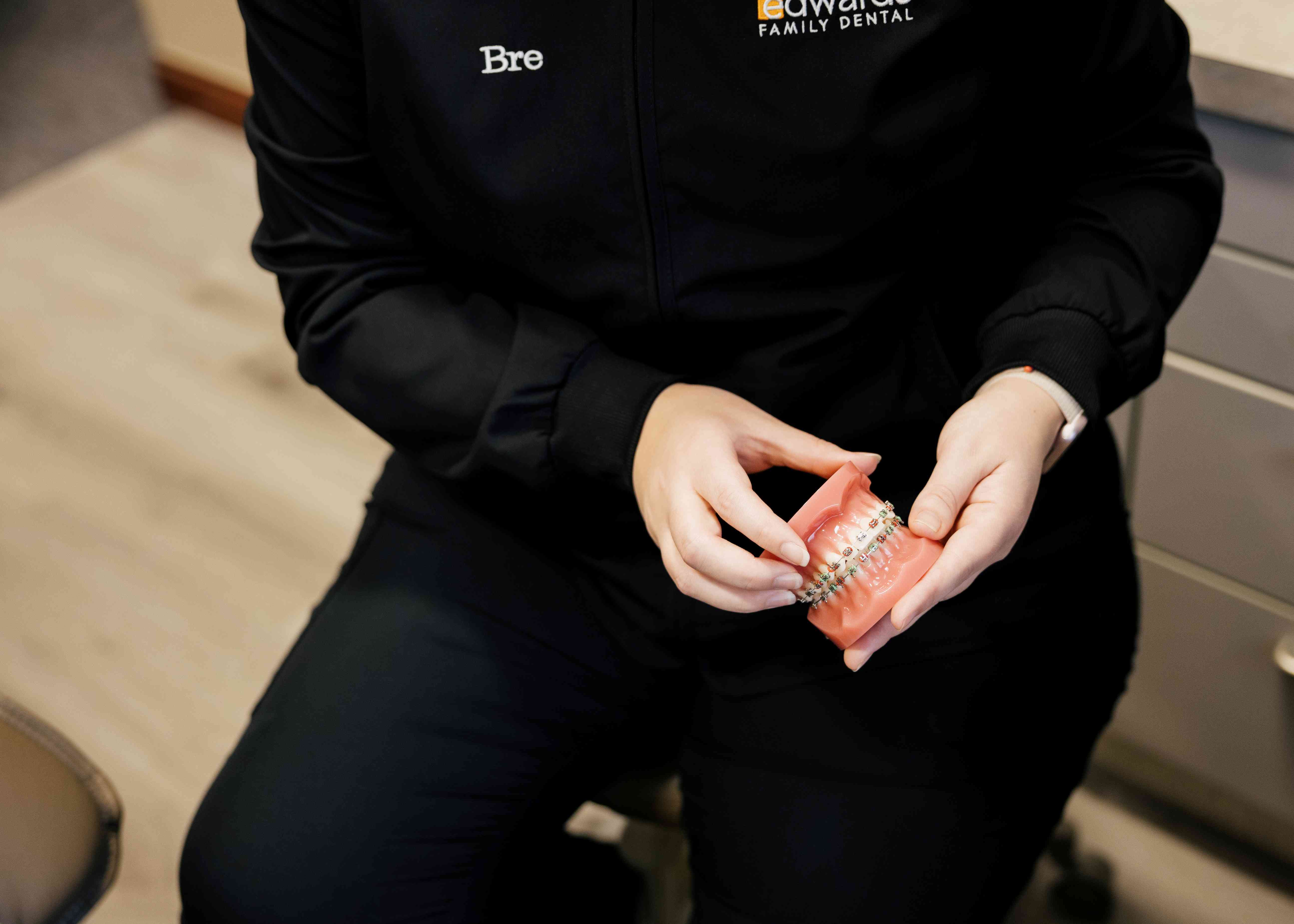

If you're considering braces for yourself or a family member, you're probably feeling a mix of excitement and uncertainty. You want a straighter, healthier smile, but with so many treatment options available (from traditional metal braces to clear aligners), it's natural to feel overwhelmed about making the right choice.
The good news is that modern orthodontics offers effective solutions for nearly every situation, and understanding your options doesn't have to be complicated. Whether you're concerned about appearance during treatment, wondering about costs, or trying to figure out which approach works best for your lifestyle, we're here to help you navigate these decisions with confidence.
At Edwards Family Dental in Dublin, Ohio, we've helped thousands of patients achieve beautiful, healthy smiles over our three decades of practice. We know that choosing braces involves more than just straightening teeth; it's about boosting confidence, improving oral health, and creating a smile you'll love for life.
This comprehensive guide walks you through everything you need to know, from how different types of braces actually work to what you can expect during treatment. By the end, you'll have the information you need to make the best decision for your smile and your budget.
Quick Overview
- Treatment Duration: Simple cases may take twelve to eighteen months, while more complex alignment needs typically require eighteen to thirty-six months depending on your specific situation
- Investment Considerations: Treatment investment varies based on the type of braces you choose and your specific needs, with flexible payment plans and insurance coverage often available to help
- Treatment Options: From traditional metal braces to clear aligners, there are effective solutions for every lifestyle and budget
- Age Is Just a Number: Whether you're a teenager or in your sixties, it's never too late to achieve the smile you've always wanted
- Your Role in Success: Consistent care, following guidelines, and wearing retainers afterward are key to maintaining your beautiful new smile for life
How Do Braces Straighten Teeth Step by Step?
You might wonder how something as simple as metal brackets and wires can completely transform your smile. The process works with your body's natural healing ability: when sustained pressure is applied to a tooth, your body responds by remodeling the bone around the tooth root, allowing teeth to move gradually into better positions.
Planning Your Treatment
Everything starts with understanding exactly where your teeth are now and where they need to go. We take detailed digital scans, X-rays, and photos to map out your unique treatment plan. Modern technology lets us show you what your smile will look like even before we begin.
Getting Your Braces
Small brackets are carefully bonded to each tooth using a special adhesive that hardens under a blue light. These brackets act as handles that allow us to guide each tooth precisely where it needs to go.
An archwire is then threaded through the brackets and secured with small elastic bands. This wire has a "memory" (it wants to return to a specific shape that represents your ideal tooth alignment).
The Movement Process
As the wire tries to return to its predetermined shape, it applies gentle but consistent pressure to your teeth. On one side of each tooth root, specialized cells break down bone tissue while other cells build new bone on the opposite side. This creates space for the tooth to move gradually into its new position.
Regular Adjustments
Every 4-8 weeks, we'll adjust your braces by changing wires, adjusting elastic bands, or making other modifications to keep your teeth moving in the right direction. Each adjustment typically moves teeth about 1-2 millimeters (small changes that add up to dramatic results over time).
Protecting Your Results
Once your teeth reach their ideal positions, retainers hold them in place while the surrounding bone fully stabilizes.
Understanding Your Braces Options and Investment
When you're ready to straighten your teeth, the choice isn't just about which option works; it's about which one works for your life. Your daily routine, comfort with appearance during treatment, and budget all play a role in finding the right fit.
Each type of braces serves different needs. Some handle any challenge, others prioritize discretion, and some offer removal flexibility. Let's walk through what each option offers.
Traditional Metal Braces
The most reliable, proven approach to straightening teeth. Today's versions are much smaller and more comfortable than older models, and they work for virtually any orthodontic problem. They're typically the fastest route to your final result.
- Investment Range: $3,000-$7,000
- Treatment Time: Usually 18-24 months
- Best For: Complex cases, patients who want the most predictable results, younger patients
- Payment Options: Most practices offer monthly plans of $150-$300
Ceramic Braces
Traditional braces effectiveness with a more subtle appearance. Tooth-colored ceramic brackets blend with your natural teeth, making them much less noticeable than metal. They require slightly more care since ceramic is more fragile.
- Investment Range: $4,000-$8,000
- Treatment Time: Similar to metal braces, sometimes a few months longer
- Best For: Adults and teens who want effective treatment with better aesthetics
- Keep in Mind: Occasional bracket replacements may add $100-$200 to treatment
Clear Aligners
Maximum flexibility in your daily routine. These custom-made, nearly invisible trays can be removed for eating, brushing, and special occasions. They work exceptionally well for mild to moderate alignment issues, though not ideal for complex bite problems.
- Investment Range: $3,500-$8,000
- Treatment Time: 12-24 months, depending on your consistency wearing them
- Best For: Mild to moderate cases, patients who want maximum flexibility
- Success Factor: Requires wearing aligners 20-22 hours daily for best results
Understanding Your Investment: Insurance and Hidden Costs
Beyond the base treatment costs, understanding how insurance works and planning for unexpected expenses helps you budget accurately for orthodontic treatment.
How Insurance Coverage Works
Most dental insurance plans cover 50% to 80% of orthodontic treatment up to your lifetime maximum (usually $1,000 to $3,000). Here's what this means in practice:
If your plan covers 50% up to $2,000, you'll receive $2,000 in benefits regardless of whether your treatment costs $4,000 or $6,000. All orthodontic options receive the same coverage percentage, but since ceramic braces and clear aligners cost more upfront, your out-of-pocket amount will be higher.
Clear aligner coverage can be trickier; some insurance companies may offer reduced benefits compared to traditional braces. Always verify your specific coverage before starting treatment.
Unexpected Costs to Budget For
Emergency appointments happen when brackets break or wires poke. Visits typically cost $50 to $200 depending on your treatment type.
Extended treatment time can add $200 to $400 per month to any treatment. Following your orthodontist's instructions (wearing rubber bands, keeping appointments, maintaining good oral hygiene) prevents costly delays.
More frequent cleanings are often recommended during treatment. You might need professional cleanings every three to four months instead of every six months, adding $100 to $200 per cleaning.
Replacement fees vary by treatment type. Lost or damaged clear aligners cost $300 to $600 to replace, while ceramic bracket replacements add $200 to $400.
At Edwards Family Dental, we believe in transparent pricing and will walk you through all potential costs during your consultation. We also offer flexible payment plans to help make your investment more manageable.
Making Braces Affordable for Adults
If you've been putting off straightening your teeth because of cost concerns, you're not alone. Many adults assume orthodontic treatment is out of reach financially, but there are more options than you might think to make it work within your budget.
The key is knowing where to look and understanding that investing in your smile often pays dividends in confidence and oral health for years to come. Let's explore some practical ways to make orthodontic treatment more affordable without compromising on quality care.
Budget-Friendly Treatment Options
Traditional Metal Braces remain the most cost-effective choice, typically running $1,000 to $2,000 less than ceramic or clear alternatives. While they're more visible, modern metal braces are smaller and more comfortable than ever before.
Dental School Programs can reduce your costs by 30% to 50%, with total treatment often ranging from $2,000 to $4,000. You'll receive care from dental students under close supervision from experienced orthodontists, so you're still getting quality treatment at a fraction of the cost.
Community Health Centers in some areas offer orthodontic services on sliding fee scales based on your income. It's worth checking what's available in your area, especially if you qualify for reduced fee programs.
Smart Financial Strategies
Flexible Spending Accounts (FSAs) and Health Savings Accounts (HSAs) let you use pre-tax dollars for orthodontic treatment, effectively saving you 20% to 30% depending on your tax bracket. Since these funds often have "use it or lose it" rules, orthodontic treatment can be a smart way to maximize these benefits.
Strategic Timing can help you maximize insurance benefits. Starting treatment in January allows you to use benefits from two calendar years, potentially doubling your coverage.
Family Treatment often comes with discounts when multiple family members need orthodontic care. Many practices (including Edwards Family Dental) offer 10% to 20% discounts for families treating multiple members.
At Edwards Family Dental, we understand that orthodontic treatment is a significant investment. That's why we offer flexible payment plans and work with most insurance providers to help make treatment as affordable as possible. We're happy to discuss your options and find a payment plan that fits your budget.
What Are Orthodontic Appliances and How Do They Work?
When you think of orthodontic treatment, braces probably come to mind first. But orthodontics actually includes a whole toolkit of specialized appliances, each designed to solve specific problems with your teeth and bite. Understanding these different options helps you see why your orthodontist might recommend one approach over another for your particular situation.
Fixed Orthodontic Appliances
These appliances are bonded or cemented in place and work continuously throughout your treatment:
Traditional Braces: The most familiar option, capable of handling even the most complex alignment issues with precise control.
Space Maintainers: Often used in children when a baby tooth is lost early. These small appliances hold the space open so the permanent tooth can emerge properly, preventing crowding problems later.
Palatal Expanders: Used when the upper jaw is too narrow to accommodate all the teeth properly. The expander gradually widens the palate over several months, creating the room needed for proper alignment.
Herbst Appliances: Designed to correct overbites by encouraging the lower jaw to grow forward into a better position. These are particularly effective in growing children and teens.
Removable Orthodontic Appliances
These appliances can be taken out for eating, cleaning, and special occasions:
Clear Aligners: Custom-made plastic trays that gradually move teeth into position.
Retainers: Essential after any orthodontic treatment to maintain your results long-term.
Functional Appliances: Used primarily in growing patients to guide jaw development and improve bite relationships during the pre-teen and early teen years.
Night Guards: Protect your teeth from grinding and clenching while you sleep, especially important during orthodontic treatment when your bite is changing.
Retainers After Braces: Protecting Your New Smile
Without retainers, teeth naturally shift back toward their original positions. Retainers hold your teeth in their new positions while the surrounding bone and tissues adapt to the changes, protecting your orthodontic investment.
Your Retainer Options
We'll recommend the best type based on your specific case:
Hawley Retainers ($150-$300 each)
Traditional retainers with a metal wire across the front and colorful acrylic base. They're durable, adjustable if minor tooth movement occurs, and available in fun colors.
Clear Plastic Retainers ($100-$250 each)
Thin, transparent retainers that fit snugly over your teeth. Nearly invisible and popular with adults and teens, but more prone to cracking and need replacement more frequently.
Fixed Retainers ($200-$500 per arch)
A thin wire bonded to the back of your front teeth provides permanent retention without daily routine. You can't lose them, but they require extra attention during brushing and flossing.
Combination Approach ($300-$600 total)
Many patients benefit from a fixed retainer on the bottom front teeth (where relapse is most common) combined with a removable retainer on top.
Planning for Long-Term Costs
Removable retainers typically need replacement every 2-5 years. Budget $200-$400 every few years for replacements. Fixed retainers require regular professional cleanings and occasional repairs if the wire breaks, costing $100-$300.
At Edwards Family Dental, we include your first set of retainers in your orthodontic treatment cost and show you exactly how to care for them to maximize their lifespan.
Will Braces Hurt? What to Expect and How to Stay Comfortable
If you're worried about pain with braces, you're not alone; it's one of the most common concerns we hear from patients considering orthodontic treatment. Most of our patients at Edwards Family Dental tell us the initial soreness feels similar to the achiness after a good workout and fades quickly as your mouth adjusts.
What to Expect During Your Treatment
The First Week
Expect some tenderness for three to seven days after getting your braces. This initial period typically involves the most discomfort as your teeth begin moving.
After Adjustments
Each adjustment may cause one to three days of mild soreness, usually gentler than that first week.
Unexpected Issues
Occasionally, a bracket might come loose or a wire might poke your cheek. These issues are easily fixed with a quick office visit.
Individual Differences
Some patients experience minimal discomfort, while others are more sensitive. Both experiences are normal.
Simple Ways to Stay Comfortable
Pain Relief
Ibuprofen (400-600mg every six to eight hours) reduces both pain and swelling around your teeth and gums.
Ice and Heat
An ice pack on your cheek for fifteen to twenty minutes can numb discomfort, especially after getting braces or adjustments.
Soft Foods
Stick to yogurt, soup, pasta, smoothies, and mashed potatoes for the first few days after getting braces or adjustments.
Orthodontic Wax
Apply the special wax we provide over any brackets or wires that irritate your lips or cheeks for immediate relief.
Salt Water Rinses
Mix one teaspoon of salt in warm water and rinse gently three to four times daily to reduce inflammation.
Any discomfort you experience is temporary and means your treatment is working. If you have concerns about pain or irritation, call us at (614) 761-7666.
Keeping Your Braces Clean: A Simple Daily Routine
Cleaning around braces can feel overwhelming at first, but once you establish a routine, it becomes second nature. Keeping your braces clean ensures your smile looks its absolute best when treatment is complete, and with the right tools and techniques, you can maintain healthy teeth and gums throughout treatment.
Your Daily Cleaning Routine Made Simple
Here's what we recommend to our patients at Edwards Family Dental:
- Brush after every meal: Use a soft-bristled toothbrush and fluoride toothpaste, cleaning thoroughly around each bracket
- Use the right angle: Brush at a 45-degree angle both above and below brackets
- Try interdental brushes: These cone-shaped brushes clean between wires and around brackets
- Water floss daily: Use medium pressure to remove debris from hard-to-reach spots
- Don't skip traditional flossing: Use floss threaders or orthodontic floss to clean between teeth
Foods That Can Cause Problems
Some foods can damage your braces or make cleaning difficult:
- Hard foods: Nuts, hard candy, ice cubes, and raw carrots can break brackets or bend wires
- Sticky treats: Caramel, taffy, gum, and sticky candy can pull brackets off
- Crunchy snacks: Popcorn, chips, and pretzels get stuck and are difficult to clean out
- Sugary drinks: Soda, sports drinks, and fruit juices increase cavity risk around brackets
These dietary adjustments are temporary. Once your braces come off, you'll enjoy all your favorite foods again with a beautiful, straight smile.
Traditional Metal Braces: Effectiveness and Treatment Time
If you're considering metal braces, you might be wondering why they've remained so popular when newer options are available. Traditional metal braces are still the most reliable choice for complex cases that need precise control, and modern versions are much smaller and more comfortable than what you might remember.
Why Metal Braces Excel
Continuous treatment: They apply consistent pressure 24/7 without depending on you to remember to wear them.
Handle any complexity: From severe crowding to complex bite issues, metal braces tackle cases that other treatments can't manage effectively.
Exceptional durability: Metal brackets rarely break or come loose, meaning fewer emergency visits and no treatment delays.
Precise control: Your orthodontist can control tooth movement in all directions with exceptional accuracy.
Treatment Timeframes
Simple cases: 12 to 18 months for minor crowding or spacing
Moderate cases: 18 to 24 months for most common orthodontic problems
Complex cases: 24 to 36 months for severe crowding, significant bite corrections, or surgical coordination
Adult considerations: Treatment often takes 25 to 30% longer than for teenagers due to denser bone structure, but results are equally successful.
Clear Aligners Like Invisalign: How They Move Teeth
If you've ever wondered how a thin piece of plastic can actually move your teeth, you're not alone. The technology behind clear aligners like Invisalign is pretty remarkable, and understanding how it works can help you feel more confident about choosing this treatment option.
Clear aligners use controlled pressure to gradually shift your teeth into better positions, working with your body's natural healing response.
The Digital Planning Process
Treatment begins with detailed digital scans that capture every surface and contour of your teeth. Computer software calculates the exact movements needed and designs your complete series of aligners, each moving your teeth closer to their final positions over one to two weeks of wear.
Each aligner applies precise pressure to specific teeth, creating the gradual movement that transforms your smile step by step.
What Clear Aligners Can and Cannot Do
Clear aligners work exceptionally well for many orthodontic issues, but they do have some limitations. Understanding these helps set realistic expectations for your treatment.
Clear aligners excel at: Closing gaps between teeth, correcting mild to moderate crowding, fixing minor rotations, and addressing certain bite issues. They're particularly effective for cases where teeth need to move in a more straightforward pattern.
Traditional braces may be better for: Severe rotations, especially of round teeth like canines, significant vertical movements where teeth need to move up or down substantially, complex cases requiring more than moderate space creation, and situations where precise root positioning is critical.
The key factor in any clear aligner success is consistency. These systems work beautifully when worn as directed (typically 20 to 22 hours daily). The aligners can only move your teeth when they're actually in your mouth applying that gentle, consistent pressure.
Making the Right Choice for Your Smile
Choosing the right orthodontic treatment starts with understanding your needs, your goals, and what fits your lifestyle. The complexity of your case, your day-to-day routine, and your long-term expectations all play a role in finding the right approach.
At Edwards Family Dental in Dublin, Ohio, we take the time to walk you through your options and recommend a plan that supports both your results and your overall oral health. Our team has experience with a wide range of cases, from simple alignment issues to complex bite corrections, and we offer flexible payment options while working with most major insurance providers to help make treatment more manageable.
With consistent care and regular check-ins, orthodontic treatment can deliver predictable, lasting results. If you're ready to explore your options, contact Edwards Family Dental by calling (614) 761-7666, or you can schedule your consultation online. We're here to guide you every step of the way.

Staff 2005

Staff 2025

20 Year Celebration
Barbecue, ice cream truck, lawn games, freebies, meet & greet with Dr. Edwards, and more!
We Can’t Wait to Meet You!
Call 614-761-7666 or request an appointment online to set up your first visit. We’ll be in touch soon.